Laboratories
Research equipment available at the Department of Quantum Engineering and Metrology
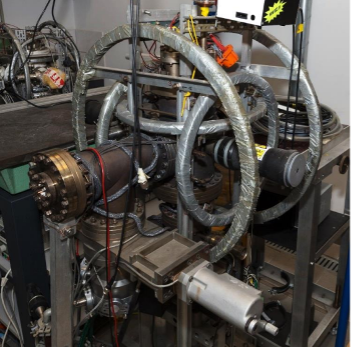
Double-resonance "laser – microwave" setup in a Paul trap for studying interactions between the electron shell and the nucleus in free atoms and ions
10-9 mbar
0.01 – 20 GHz
485–530 nm, 570–620 nm
15 min
400 – 700 kHz
1 – 1.5 kV
Studies of charged particle systems confined in electromagnetic traps and interacting with electromagnetic fields and laser radiation for the development of novel electric, magnetic and atomic force sensors.
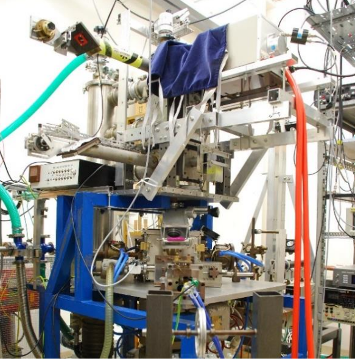
Double-resonance "laser – microwave" setup on a free atomic beam for studying interactions between the electron shell and the nucleus in free atoms and ions
10-6 mbar
0.01 – 20 GHz
485–530 nm, 570–620 nm
15 min
Laser spectroscopy of atoms with limited degrees of freedom using laser-induced fluorescence and double-resonance laser-microwave spectroscopy methods.
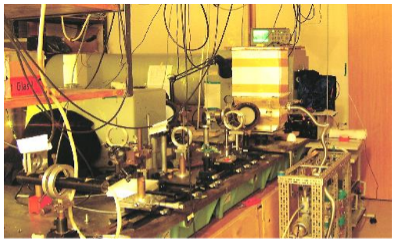
Laser-induced fluorescence setup in a hollow cathode for studying interactions between the electron shell and the nucleus in free atoms and ions
10-3 mbar
Argon, neon
485–530 nm, 570–620 nm
10 – 200 mA
up to 500 V
Investigation of atomic electron shell structure and determination of resonant electromagnetic transitions (particularly in rare-earth atoms and metals with open 3d, 4d and 5d shells) using laser-induced fluorescence spectroscopy.